Is a heated sapphire a fake? No, it's a natural stone that spent time in a furnace. The twist: the heat is rarely the problem. Silence is. Here's my checklist for heated vs unheated gemstones, so you know what to ask before you pay.
What does heating actually do to a stone?
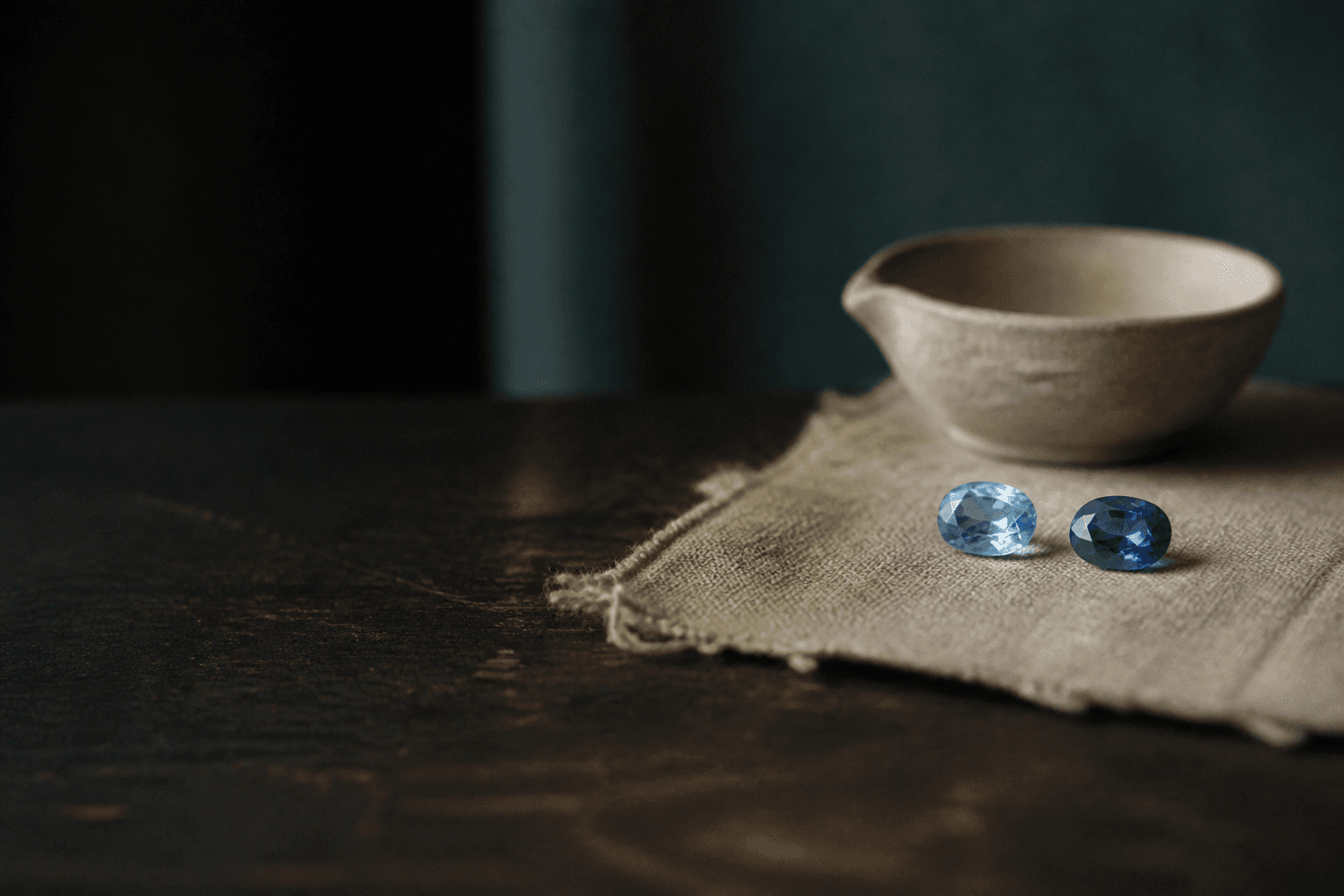
Picture this (it's imaginary, but you'll recognize it). Two blue sapphires sit side by side on velvet. One is a deep, even blue. The other is softer, a little hazy. The first one has probably been heated.
Heating is a very common treatment for many gem types. According to the International Gem Society, it can lighten color or remove unwanted secondary colors. The author there says he has no problem with disclosed heating, because heat only modifies a stone and doesn't put anything into it that wasn't already there. He also admits some purist buyers want only "unaltered" stones. That's a fair taste, and it's allowed.
The look changes too. One retailer's guide says heated stones often look brighter, more transparent and livelier in direct light. Unheated stones may have a softer, slightly diffused glow. The same guide calls the difference a matter of visual preference, and I agree.
Then there are inclusions, the tiny features that form inside a crystal as it grows. Think fine needles, feather-like wisps, little mineral crystals. Heating can dissolve or alter some of them, so a heated stone often looks cleaner to the naked eye.
Some stones start out looking unpromising. Geuda is the name for colorless, white or pale blue Sri Lankan sapphires that turn an intense, even blue after heating, as JCK reported in its coverage of GIA's lab research. For these stones, heating is the step that finishes the job.
Is the result durable? According to IDT Gemological Laboratories, heat treatment is stable and permanent, and a heated sapphire is as durable as an unheated one. IDT sells lab services, so weigh that, but it matches what the other sources describe.
Does the seller have to tell you?
The honest answer is murkier than you'd hope.
GIA's technical paper on heat treating ruby and sapphire says no consensus has been reached on whether any of these treatments need to be disclosed to the buyer. Some people point out that heated blue aquamarine isn't customarily disclosed, so why single out sapphire? GIA's authors say that logic may hold for treatments that mimic natural processes. They add that other methods, diffusion in particular, don't get the same pass. (Diffusion means elements get into the stone from outside. The excerpt I have cuts off mid-sentence, so I can't give you their full reasoning.)
The roots go back a while. At the first World Congress of the International Colored Gemstone Association in 1985, several prominent gemologists drew a line. Treatments like heat, which "complete what nature left unfinished," need not be disclosed. Treatments that don't copy nature should be. GIA's 2004 Gems & Gemology article on U.S. law notes that the trade press of the time showed almost no consensus on how far disclosure should go.
That article also has a small story worth remembering. A dealer offers heat-treated sapphires to a jeweler he's never met. He wrongly assumes she's a gemologist who can spot the heating. He says nothing. She assumes the stones are unheated, says nothing either, and buys. In the article's scenario, the dealer isn't liable, because he didn't know what she assumed.
The lesson for you is simple. Don't leave your assumption unspoken. Say it out loud, and get the answer in writing.
One caveat. That example is about two trade businesses in the U.S., and I'm not giving legal advice. My notes don't cover the rules in Canada, the UK or the EU, so check what applies where you live.
Here's the checklist I'd carry into any shop or onto any listing:
Can you spot heating yourself?
Not with your eyes, and not by color. IDT's own myth-busting says some heated sapphires are more vivid than unheated ones, and some unheated ones are pale. Only a lab test confirms, it says.
Under a microscope, there are clues. A jeweler's guide says needle-like inclusions in an unheated sapphire look whole and intact. In a heated one, the needles may break into smaller dots. Another guide from CaratX lists melted-looking inclusion pockets nicknamed "snowballs," disc-shaped cracks called "lily pads," and rutile silk (fine needle crystals) that looks beaded or dissolved. That's gemologist territory, and a beginner's loupe won't settle it.
It gets harder. The jeweler's guide says low-temperature heat treatments are getting harder to detect. GIA's technical paper mentions an old test in which you heat the least valuable stone in a parcel to see how it behaves. Even its source called the wisdom of that "doubtful," and the paper says it gives no definite answer anyway.
Labs also disagree with each other, or at least one forum poster says so. On an IGS forum thread, a buyer describes Ratnapura sapphires sold as heated that came back unheated from two major labs. He also describes stones cut from known untreated rough that came back heated. His verdict was a scientific wild guess, though he used a saltier word. That's one anonymous post, so treat it as a warning flag and not a finding. The same thread points to a newer process: sapphires heated at high temperature and low pressure, which first entered the market in 2009 and became more common since 2016.
Labs do learn and change how they report. JCK covered a GIA lab announcement of a standard "heat treated" disclosure on suspected blue sapphires. After a year of research, the lab concluded that an unusual color effect came from a specific heating regimen used by a Sri Lankan resident. It found no evidence of diffusion. So a lab report is an expert opinion built on evidence, not a stone's birth certificate.
When is a lab report worth the money?
Reports cost money, and I can't quote you fees because my notes don't have any. So here's my rule of thumb, which is the blog's view and not a law.
Pay for a report when you're paying a premium for "unheated." The jeweler's guide says an "unheated" note on a certificate often increases a gem's value, even if it means accepting some natural inclusions or softer color. Another retailer, Wild Fawn, says unheated stones are rarer and carry a higher price, while heated stones give you more vivid color for the same budget. That same retailer says heated stones likely won't appreciate in value the same way. Nobody can promise that, and I wouldn't buy any gem as an investment on that reasoning.
If you're buying a modest ring for daily wear, a heated stone is perfectly fine, the jeweler's guide says. In that case, a clear written disclosure on the invoice may be all you need. The bigger and pricier the stone, the more a wrong answer hurts, and the more a report pays for itself.
Mind who's talking, too. IDT and the jewelers quoted here all have something to sell. IDT claims its data shows most buyers don't know their sapphire is heated until it's tested. That's their own claim, and I can't check it.
What about irradiation, and the dealer behind the stone?
Heat isn't the only treatment. The IGS article says some commercial stones are irradiated to alter or add color. Its author doesn't like adding things to stones that weren't there before and doesn't recommend irradiated gems. Whether you agree is your call, but it's one more reason to ask "which treatments" and not just "is it heated?"
The same author argues that honest dealers who handle rough and cut their own stones help you avoid 95% of the fraud that occurs at the major cutting centers. That's his estimate, not a study. He also says no one is perfect, and treated or substituted stones can slip past experienced dealers too. Such dealers cost more, he says, and you decide if it's worth it. Gem buyers, in his words, get what they pay for.
So which should you buy?
Here's the blog's view. If you want a pretty stone to wear every day, buy heated, and make sure the heating is disclosed in writing. If you love the idea of a stone exactly as the earth made it, or you're collecting, buy unheated and get the lab paper. Both are honest choices. The only dishonest one is the stone that's sold to you without a straight answer.
Searching for "heated or unheated gemstones" will give you a lot of opinions, and many are written by people selling one or the other. Searching "heated vs unheated sapphire" will too. Ask the questions yourself.
Quick answers for beginners
Is a heated sapphire real? Yes. IDT says a heated sapphire is 100% natural sapphire, not synthetic or glass. The IGS author adds that heat only modifies the stone.
Does heating wear off? IDT says heat treatment is stable and permanent, and a heated sapphire is as durable as an unheated one.
Can I tell by looking? Not reliably. Color won't tell you, and the clues in the inclusions need a trained eye and often a laboratory.
Is unheated always better? Not necessarily. Unheated is rarer and often costs more, but heated stones can be brighter and cleaner. For daily wear, one jeweler's guide says heated is perfectly fine.
Before you buy, write your three or four key questions on your phone, ask them in order, and keep the answers in the receipt. That small habit does more for you than any glossy brochure.
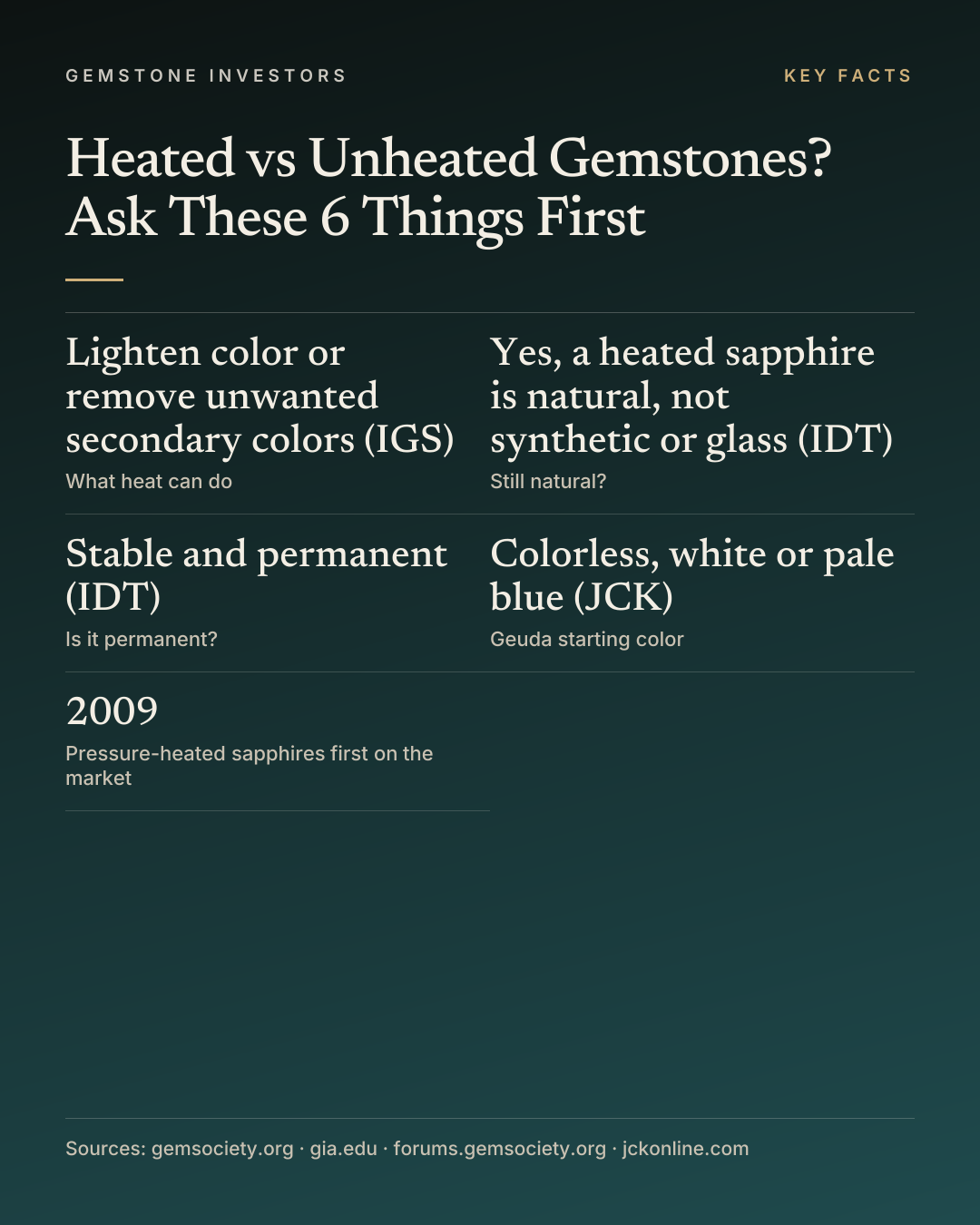
Infographic: the key facts
Sources and further reading
- How Can Gem Buyers Protect Themselves from Fraud? - IGS · gemsociety.org
- Heat Treating Ruby and Sapphire: Technical Aspects - GIA · gia.edu
- Electric Heat Treatment of Saphires - Gem Related Discussion - IGS Forums · forums.gemsociety.org
- GIA gem lab to issue standard 'heat treated' disclosure on suspected blue sapphires - JCK · jckonline.com
- Gem Treatment Disclosure and U.S. Law - GIA · gia.edu
- Unheated vs Heated Gemstones: Visual Differences You Should Know - Blog for Gemstone Lovers · jupitergem.com
- Heated Vs. Unheated Gemstones: Why it Matters? – Matthew Ely Jewellery · matthewely.com.au
- The Definitive Guide to Heated vs. Unheated Gemsto... | Blog · caratx.com
- The Differences Between Heated and Unheated Gemstones – Wild Fawn Jewellery · wildfawnjewellery.com
- Heated vs Unheated Sapphire: Which Is Better for You? - IDT Gemological Laboratories Worldwide · idtworldwide.com